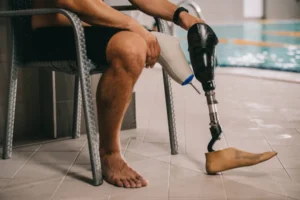
If you’re reading this, chances are you’re walking alongside someone dear to you who’s recently undergone an amputation. First, let me say this: you’re already showing incredible love and strength by simply seeking ways to support them.
At Cornerstone Prosthetics and Orthotics, we’ve been privileged to witness countless journeys of healing and adaptation. Each story is unique, and every step forward is a victory. Let’s talk about how you can make this journey smoother for your loved one, with a bit of patience, love, and understanding.
1. Understand the Emotional and Physical Journey
Limb loss is life-changing, not just physically but emotionally. It’s a process of adapting to a “new normal.” While some people feel relief after an amputation, especially if it has freed them from chronic pain, others may feel sadness, frustration, or uncertainty.
We often remind caregivers that the road to recovery isn’t linear. Your loved one might feel motivated one day and discouraged the next, and that’s okay. It’s not about forcing positivity but about being present for them, whatever they’re feeling.
Tip: Educate yourself about what they’re experiencing. Research limb loss, phantom limb pain and sensations, prosthetic solutions, and rehabilitation. But the most valuable insights will come from listening to your loved one. Ask them how they feel and what they need, and give them the space to express themselves.
2. Choose Your Words with Care
The things you say can either uplift or unintentionally hurt. Sometimes, even well-meaning comments can miss the mark. For example:
- Instead of saying, “You’re such an inspiration,” try, “I admire your strength, but I’m here for you no matter what.”
- Avoid phrases like, “What happened to you?” or “Does it hurt?” These can feel invasive.
It’s okay if you don’t always know what to say. Just being there, listening, and offering your support is enough.
3. Build a Routine Together
One of the most helpful ways to care for someone post-amputation is by helping them establish a new routine. Daily tasks like dressing, cooking, or getting ready for the day might feel overwhelming initially.
At Cornerstone, we encourage creating systems that promote independence. For example:
- Arrange clothing in a way that’s easy to reach and manage.
- Place kitchen utensils, toothbrushes, and other essentials within comfortable reach.
- Plan morning routines that allow plenty of time to avoid stress.
Little adjustments like these help them regain control and confidence in their daily life.
4. Encourage Prosthetic Solutions at the Right Time
When your loved one is ready, introducing the idea of a prosthetic limb can be a game-changer. At Cornerstone Prosthetics and Orthotics, we specialize in designing custom prosthetic solutions tailored to each individual’s needs.
Our process doesn’t just focus on creating a functional device—it’s about restoring mobility, independence, and self-confidence. Our physiotherapists work hand-in-hand with our prosthetists to ensure the fit is perfect, while our psychotherapists provide the emotional support needed during this transition.
5. Give Them Room to Grow
It’s natural to want to step in and help with everything, but remember, part of the healing process is learning how to adapt and overcome challenges independently. While it’s okay to assist with certain tasks, try to encourage their independence whenever possible.
At Cornerstone, our orthotic and rehabilitation specialists often say: “It’s not about what we can do for the patient, but what we can empower them to do for themselves.”
6. Take Care of Yourself Too
Supporting someone through a major life change like limb loss can be emotionally taxing. Don’t forget to take care of your own mental and physical health. Lean on friends, family, or even support groups when you need to. Cornerstone offers resources for caregivers, too—because we understand that when you’re at your best, you can better support your loved one.
7. Lean on Support Networks
In Nigeria, finding a community of support is crucial. Whether it’s through local support groups, faith communities, or healthcare providers, connecting with others who’ve walked this path can make all the difference.
At Cornerstone Prosthetics, we work closely with support networks to ensure our patients and their families never feel alone. Whether it’s through physiotherapy sessions, group workshops, or one-on-one counseling, we’re here to foster a sense of community and belonging.
8. Celebrate Small Wins
Every step forward, no matter how small, is a reason to celebrate. Whether it’s the first time they put on their prosthetic, prepare a meal independently, or even crack a smile after a tough day—acknowledge it.
Recovery and adjustment are all about milestones, and celebrating them together fosters hope and positivity.
Caring for someone after an amputation is a journey of love, patience, and mutual growth. At Cornerstone Prosthetics and Orthotics, we’re here to walk this road with you. From providing top-notch prosthetic and orthotic solutions to offering emotional and physical rehabilitation support, we’re more than just a clinic, we’re a family.
If you ever need advice, a listening ear, or practical solutions, reach out to us. Together, we can help your loved one embrace their new normal with dignity and strength. Remember, you’re not alone in this journey, and neither are they.